Garden Grove has a lot of decks going up right now, and a lot of names on Craigslist and Facebook offering to build them for less than the guy before. Some of those people are fine carpenters working without overhead. Some of them will pour a footing 12 inches down in soil that needs 18, and you won't know it until the deck starts to rock five years from now. Here's what actually separates the two, and it has almost nothing to do with how nice the website looks.
Ask about footings before you ask about wood
Garden Grove sits on old alluvial fill, sandy loam in some pockets, denser clay in others, especially closer to the Santa Ana River bottomland. Clay swells when the winter rains soak it and shrinks hard in the long dry stretch from May through October. That movement is what cracks a footing that wasn't poured deep enough or wide enough to spread the load. A builder who knows the area will size footings to the actual soil on your lot, not just pour whatever size worked on the last job in Anaheim.
Ask directly: how deep are the footings going, and are they resting on undisturbed soil or fill dirt. If they're attaching the deck to the house, ask how the ledger board gets flashed. This is the single most common failure point on attached decks anywhere in Southern California. Skip the flashing, or flash it wrong, and water gets behind the siding for years without anyone noticing until there's rot in the rim joist. A contractor who can explain ledger flashing without being asked twice has built more than a handful of decks.
Permits are not optional and not a formality
Any deck over about 30 inches above grade needs a permit through the City of Garden Grove, and that height also triggers the code requirement for a guardrail. Lower decks sometimes skip the permit depending on the specifics of your lot, but a legitimate builder will tell you which category yours falls into rather than just deciding for you. The city inspects footings before concrete gets poured, checks framing before the decking goes down, and does a final once railings and stairs are in. If a contractor tells you permits slow things down and you're better off skipping it, that's not a time-saver, that's a decision to build something the city can make you tear out later, and it can also become a real problem when you go to sell the house and it shows up as unpermitted work on the inspection report.
If your property is in one of the newer developments with an HOA, check the architectural guidelines before design gets finalized. Older streets around Historic Downtown Garden Grove and the neighborhoods built up through the 1950s and 60s mostly don't have HOA review, but they often have older wood-framed houses with foundations that have settled a little over 60-plus years, which matters when you're tying a new structure into an old one.
Materials: what actually holds up here
Garden Grove doesn't get freeze-thaw cycles, so wood decking doesn't split from ice the way it does in colder states. What it gets instead is sun. Long stretches of UV exposure, especially through the dry season, gray and check untreated wood fast. Redwood and cedar look great for the first year or two and then need staining every 2 to 3 years to keep from silvering and cracking. Pressure-treated pine is cheaper and structurally fine for framing, but it's not what you want as the visible decking surface without a real maintenance routine behind it.
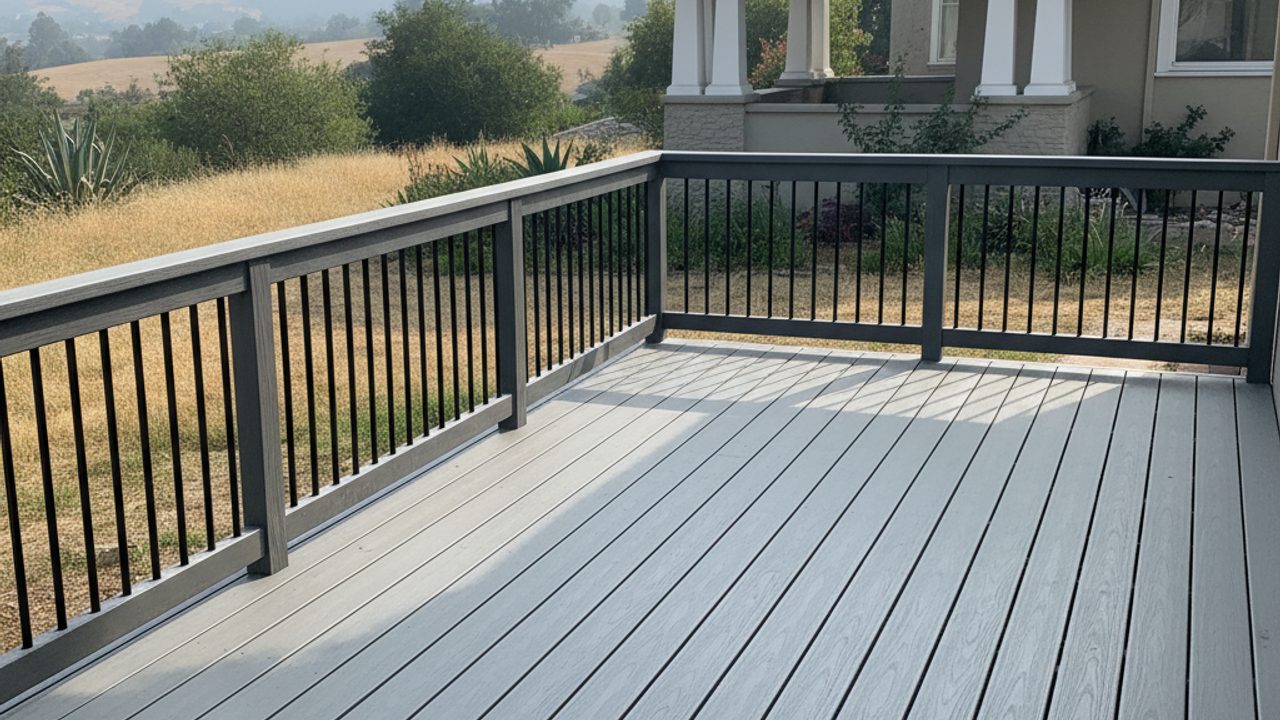
Composite decking costs more up front, generally 2 to 3 times the material cost of pressure-treated lumber, but it doesn't need staining and holds up better against the UV load here. It's not maintenance-free, though, and any builder who tells you it is hasn't dealt with a composite board that's warped from being installed too tight with no gap for expansion. Composite still needs joist spacing tightened up, usually to 12 inches on center instead of the 16 inches standard for wood, because it flexes differently under weight. If a quote for composite decking doesn't mention adjusted joist spacing, ask about it.
License, insurance, and what those words actually mean
In California, deck construction over a certain value needs a licensed contractor, typically a B general contractor or C-13 framing license depending on scope. Ask for the license number and look it up yourself on the CSLB website, it takes two minutes and shows you whether it's active, what class it is, and whether there are complaints against it. Also ask for proof of workers' comp insurance, not just liability. If someone falls off a ladder on your property and the contractor has no workers' comp, that liability can land on your homeowner's policy.
None of this guarantees a good builder, but its absence is a reliable way to spot a bad one.
What actually walks you away
- A bid that's dramatically lower than every other bid you got, with no explanation for the gap.
- Reluctance to put the scope of work, materials, and timeline in writing.
- No mention of permits, or a suggestion to skip them.
- A demand for full payment up front. A deposit is normal, usually 10 to 30 percent. The rest should follow milestones.
- Vague answers about footing depth or ledger flashing when you ask specifics.
A good deck in Garden Grove's climate should last 20 to 25 years with reasonable upkeep, longer for composite. That number depends entirely on whether the footings were sized for the soil, the ledger was flashed correctly, and the wood or composite was matched to how much sun that side of the house actually gets. Get three quotes, ask the same specific questions of each one, and pay attention to who answers without hesitating. If you want to see how we handle footings, framing, and materials on our own jobs around town, our deck builder work page walks through it in more detail.